Western Australian Golf Club
Restoration and contemporary expansion of a 1928 Tudor-style clubhouse, one of Western Australia's most enduring heritage sporting institutions. Every new intervention was held to the material discipline and craft standard of the original build.
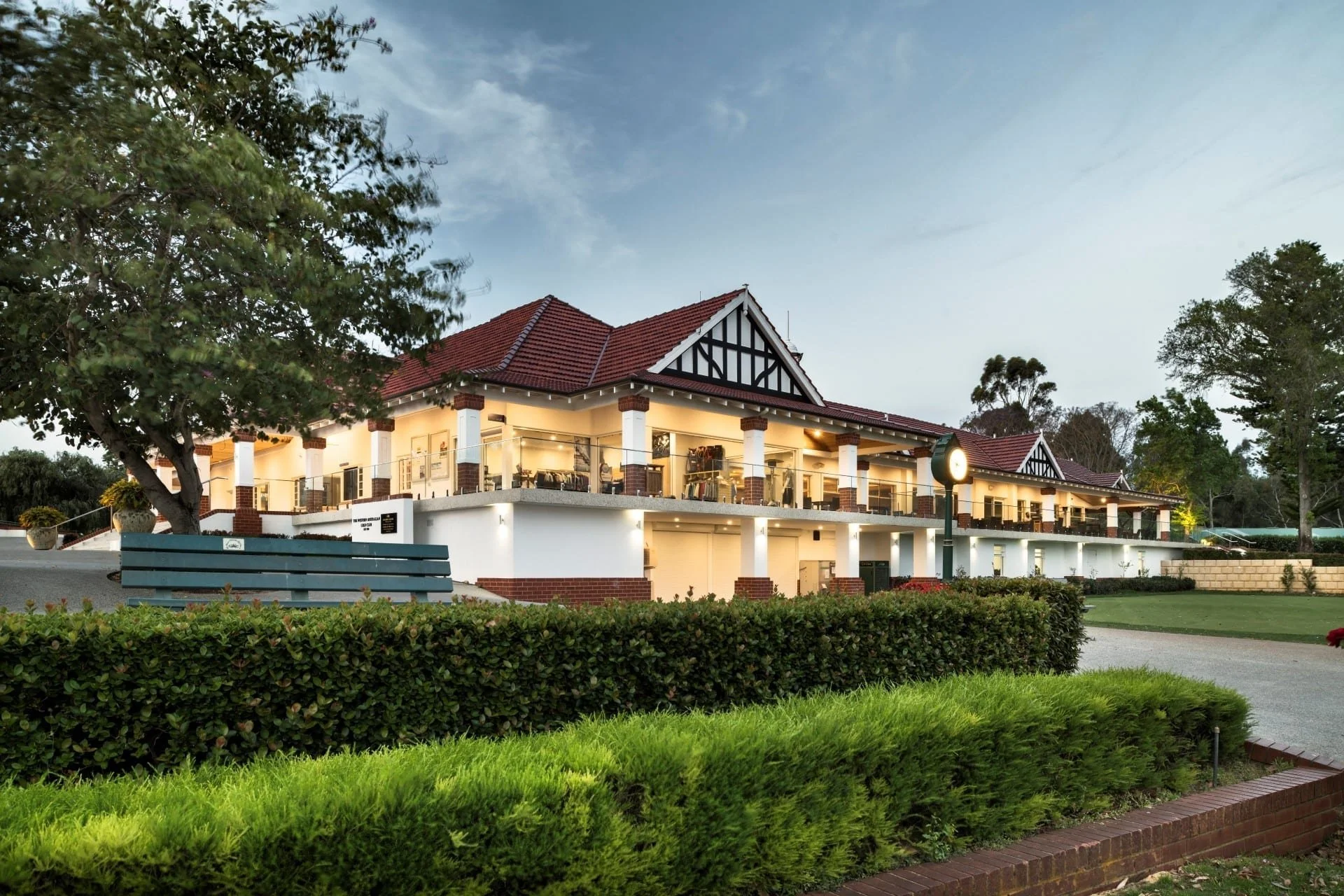
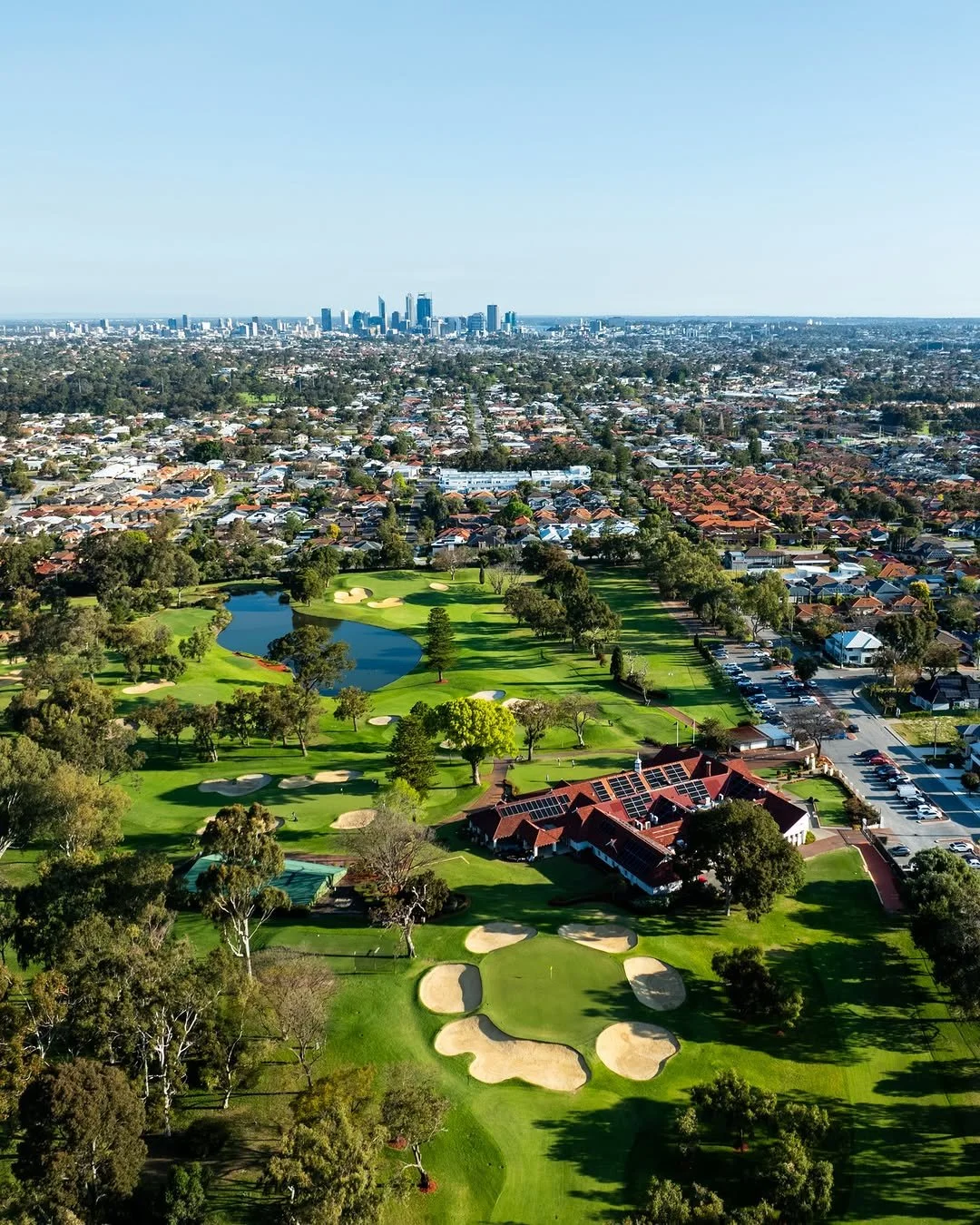
The clubhouse has occupied its site since 1928, its Tudor-influenced form, steeply pitched roof planes, expressed masonry piers, and generously proportioned fenestration, its authority accumulating with age.
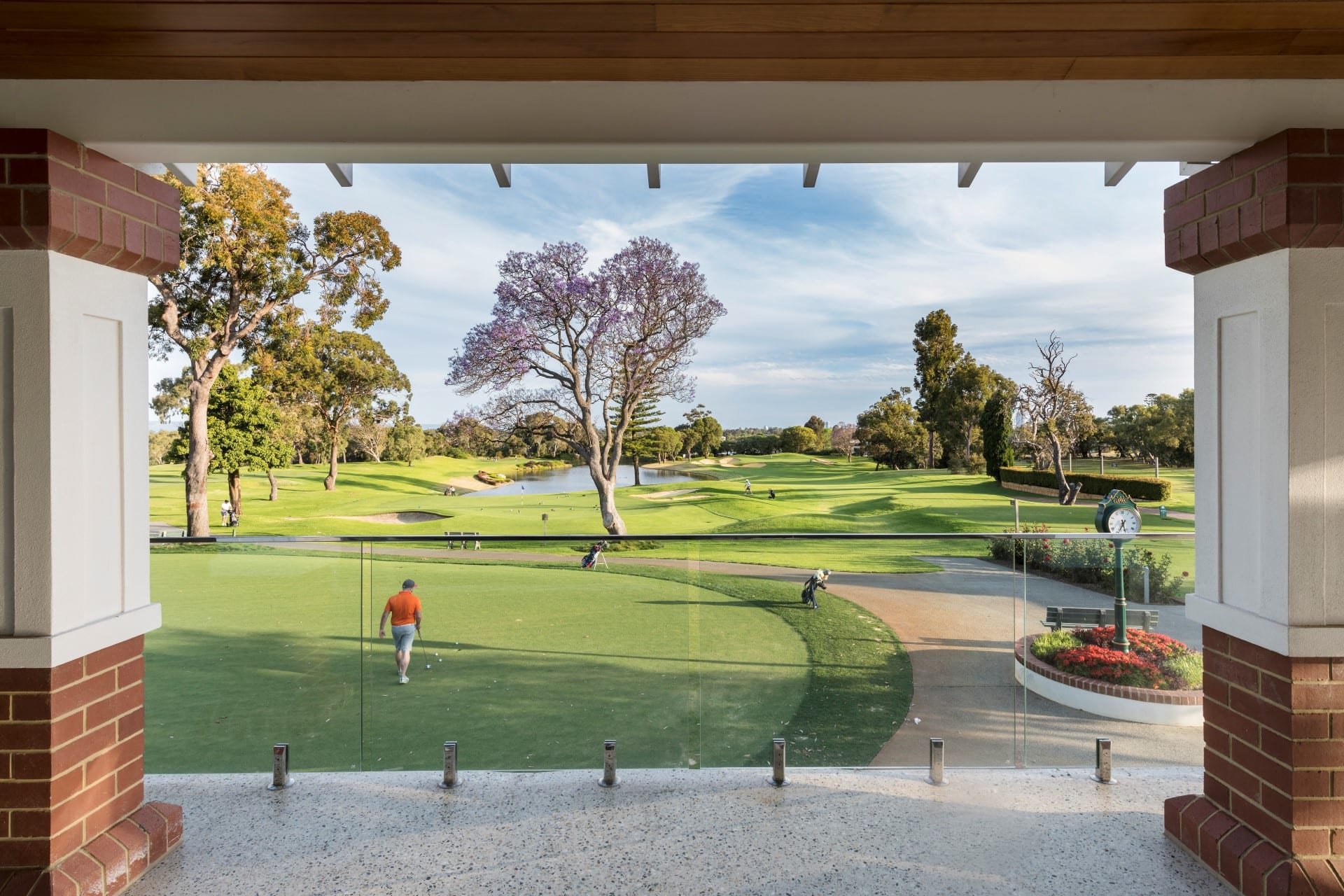
The brief was precise: modernise the institution, expand its facilities, and leave the building's presence in the landscape intact. New elements, the entertaining balcony, the reconfigured entry, the teaching and storage facilities integrated below, were designed and built to read as continuations of the existing building rather than additions grafted onto it. The arrival sequence was sharpened and the relationship between structure and landscape reaffirmed, without a single element announcing its newness.
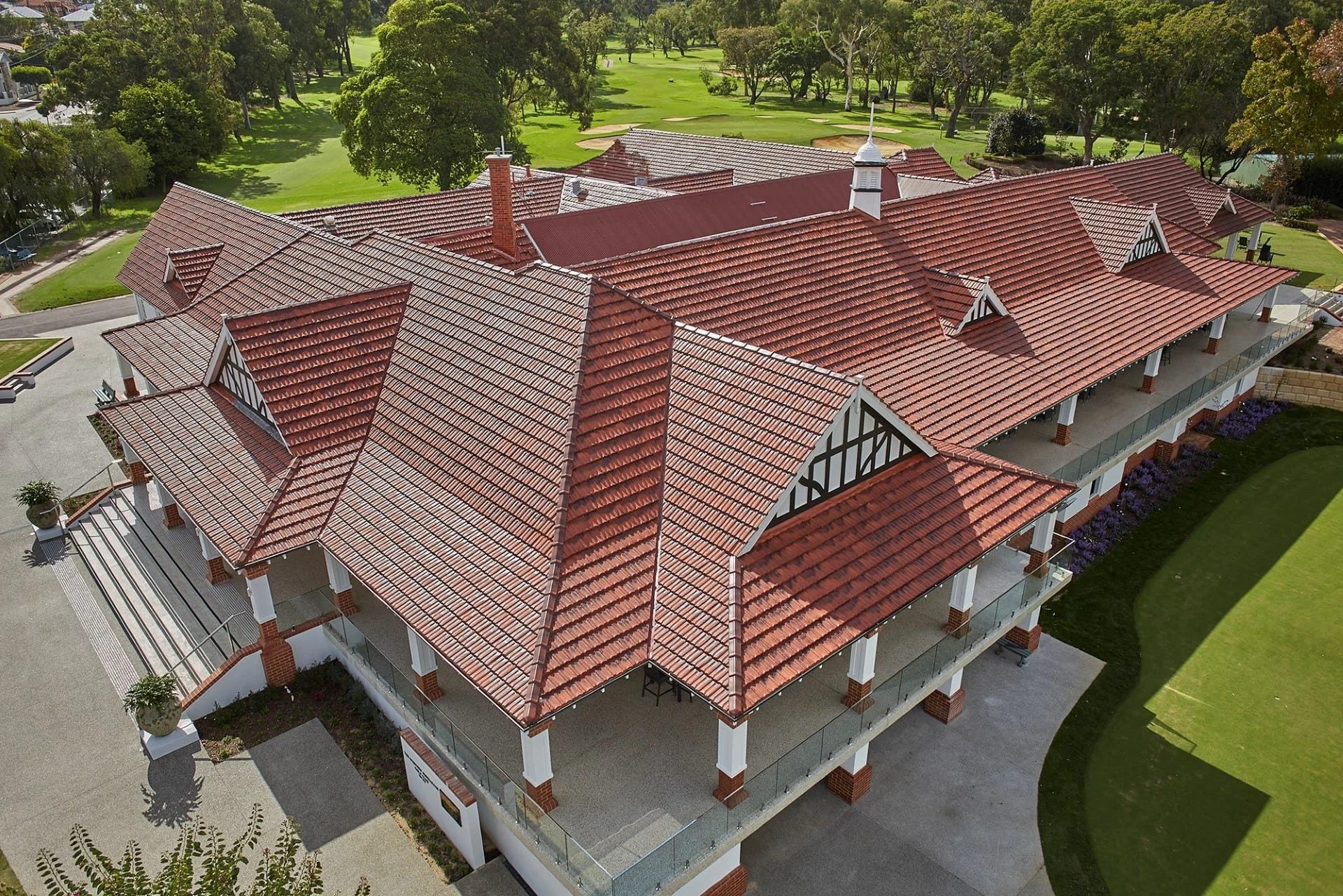
Full roof restoration formed the structural core of the project, a systematic process of remediation, assessment, and staged renewal requiring a working knowledge of heritage construction well beyond standard practice.
Replacement elements were sourced and finished to match the tonal and textural character of the original fabric. Every junction between restored roof structure and new balcony framing, between reconfigured entry canopy and existing masonry, was resolved with the restraint heritage work demands: no expressed shadow lines where none previously existed, no material transitions that read as insertions. Working within a fully operational club throughout required staging precision and trade coordination of a kind that greenfield construction simply does not demand. The measure of this project is not what was added, but how carefully the original fabric was protected.
Internally, the refurbishment holds a careful line between modernisation and material memory.
Contemporary hospitality and member amenity have been absorbed into the plan without disrupting the spatial logic of the original rooms, their proportions, ceiling heights, and relationship to the course beyond. The new balcony extends the primary function spaces outward, framing views across the fairways through a structural edge that feels considered and permanent. Light moves through the building as it always has, entering through the period windows, washing across restored plaster surfaces, registering in the depth of shadow the masonry walls produce. The completed clubhouse feels neither renovated nor preserved. It feels as it should.
“Our clubhouse has been part of this site since 1928. The membership has a strong attachment to it, and any significant works carry a weight that goes beyond the construction programme. Sevenmile Projects understood that from the outset. The staging was careful, the quality of the work matched what the building deserved, and the club remained open and operational throughout. That combination is harder to achieve than it sounds.”
— General Manager, Western Australian Golf Club