Omeo
A sculptural coastal residence carrying the material weight of civic architecture. Its upper volume is constructed from continuously curved white and deep blue glazed brickwork, demanding masonry set-out precision and custom junction detailing well beyond residential convention. Finalist in the Australian Think Brick Awards, National HIA, and MBA Building Awards.
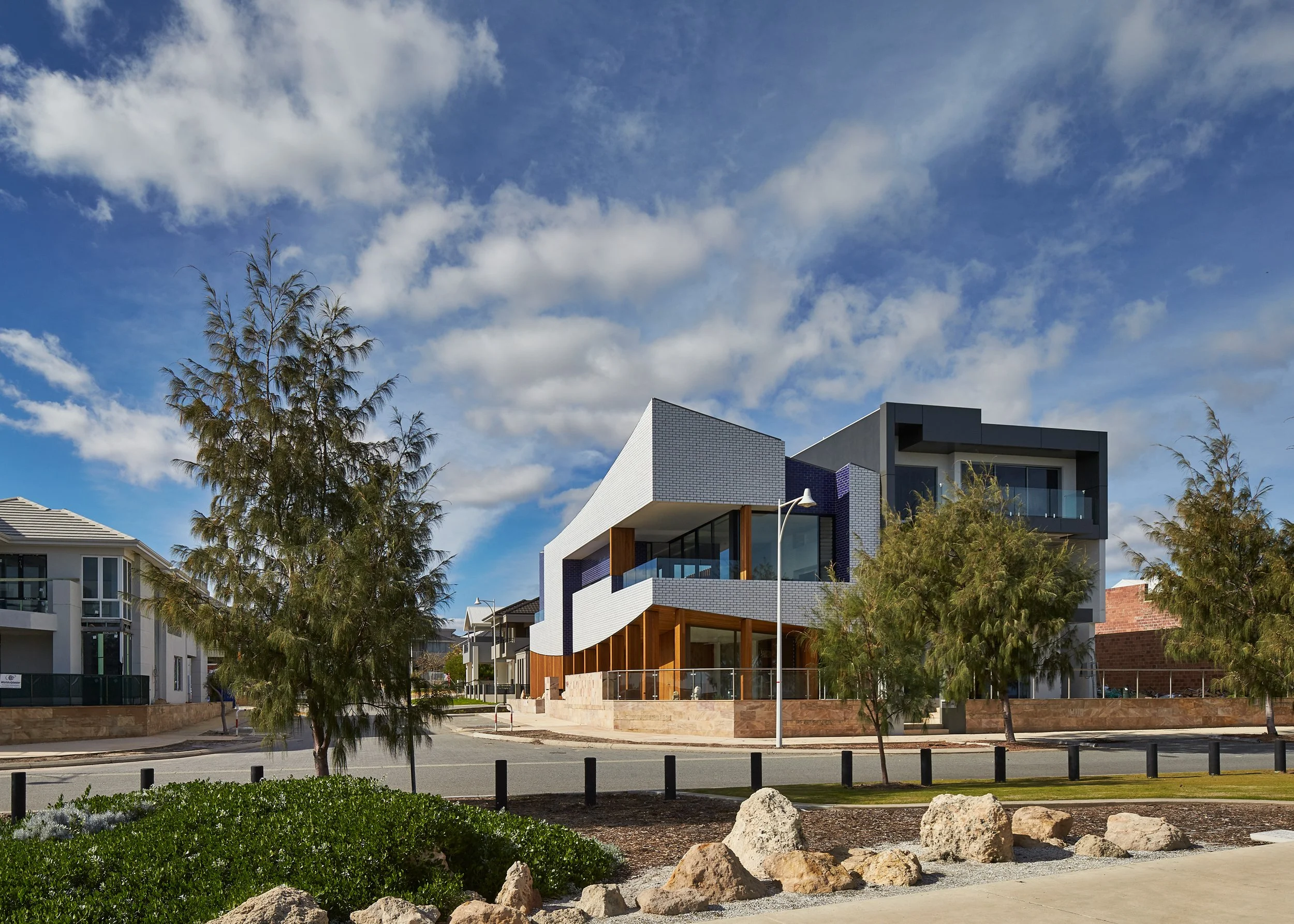
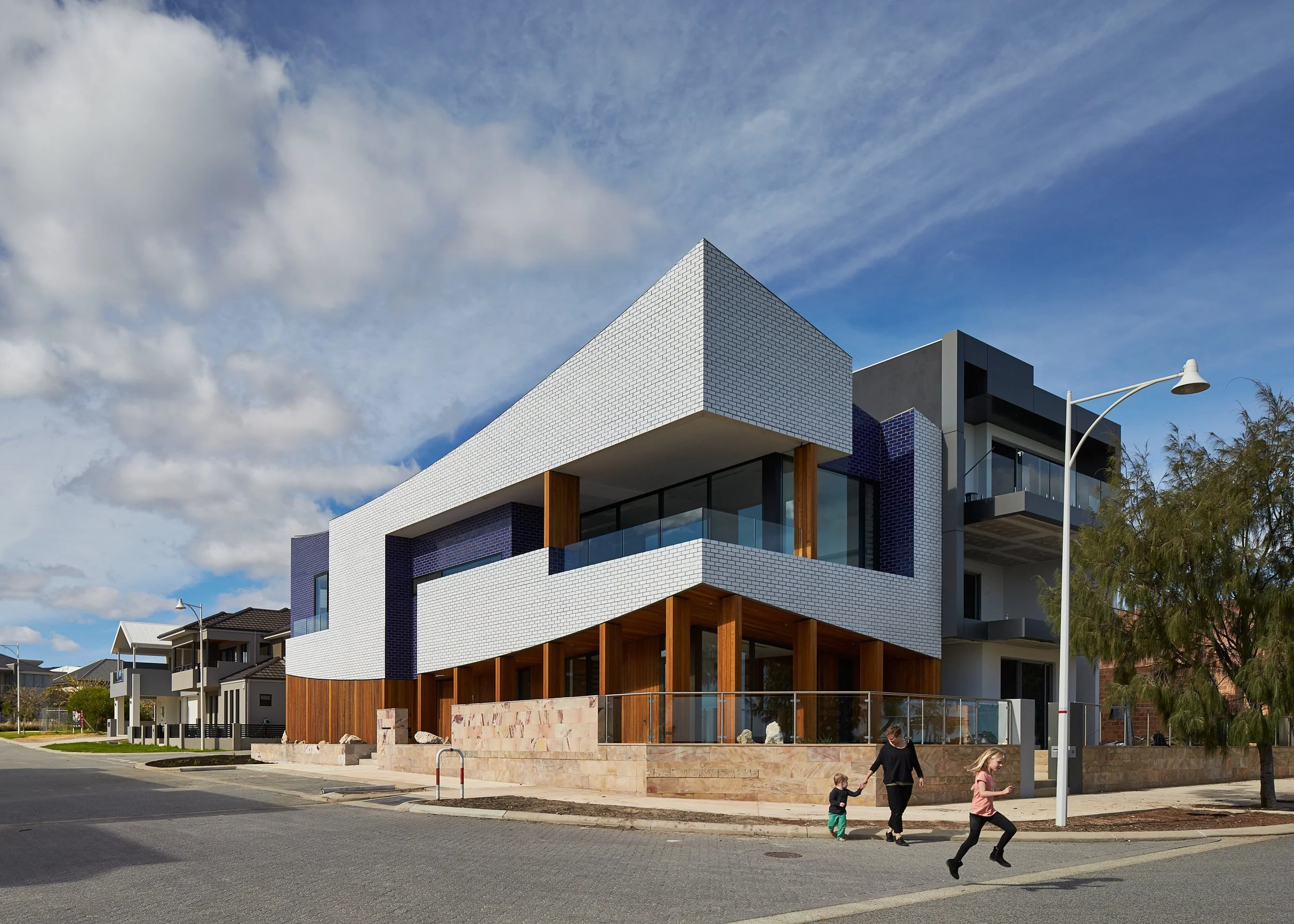
Omeo House sits at the terminating position of a coastal terrace row, a site with visual prominence and a planning expectation for architectural distinction.
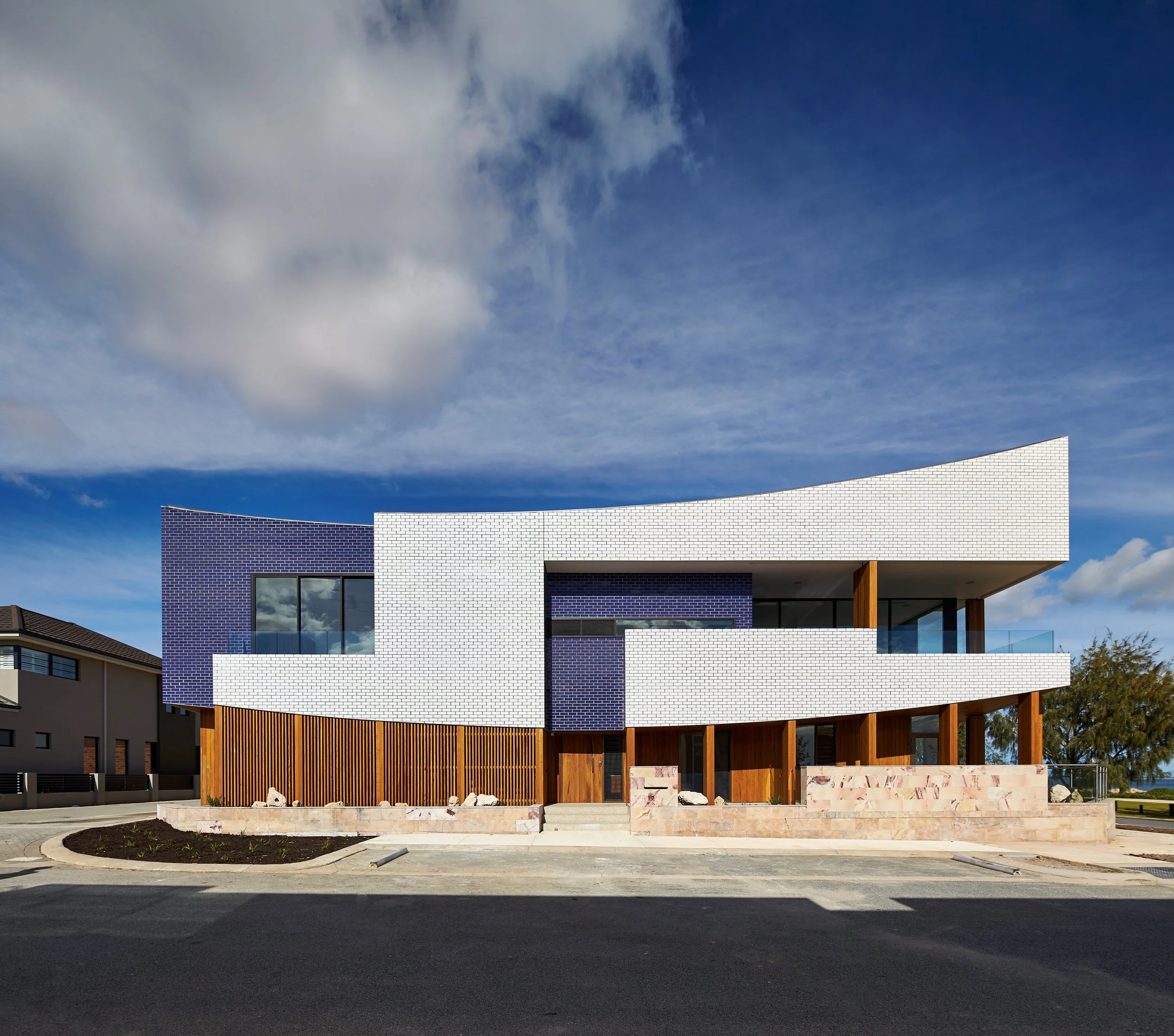
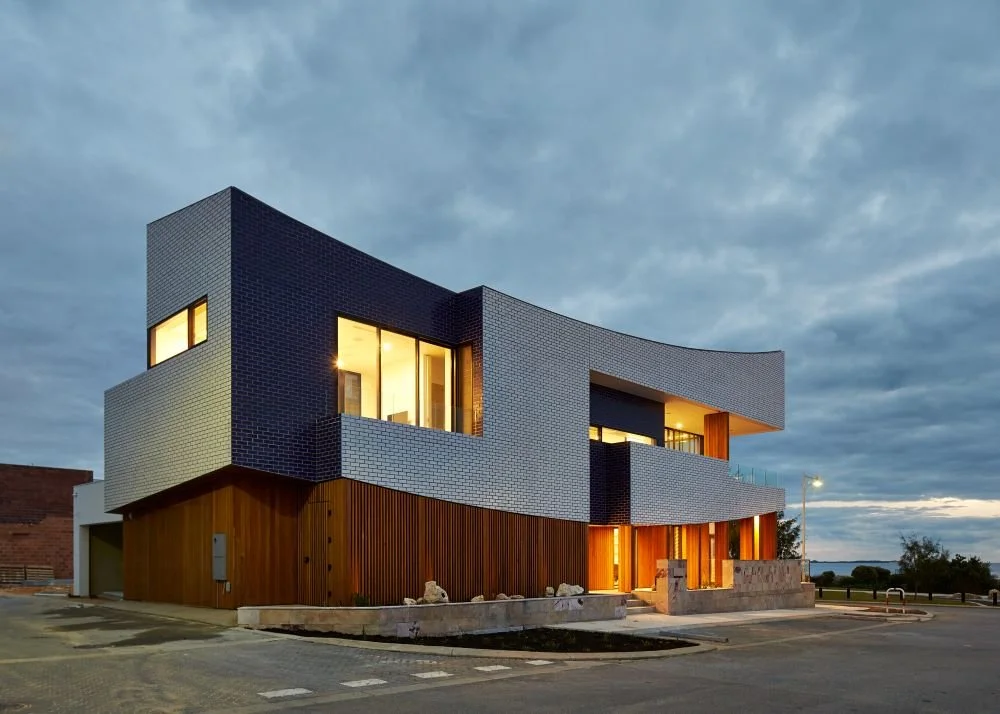
The formal logic of the building draws from the maritime history of the location. The Omeo, a Victorian barque whose remains are visible offshore, provides the geometry for the upper-level volume, which sweeps across the site in a continuous curvilinear arc. The building meets the streetscape with the composed weight of civic construction, its glazed brick mass registering permanence against the lighter residential fabric of its neighbours. A contrasting timber-clad volume grounds the composition below, reinforcing the reading of a vessel in dry dock and giving the building the duality its form requires.
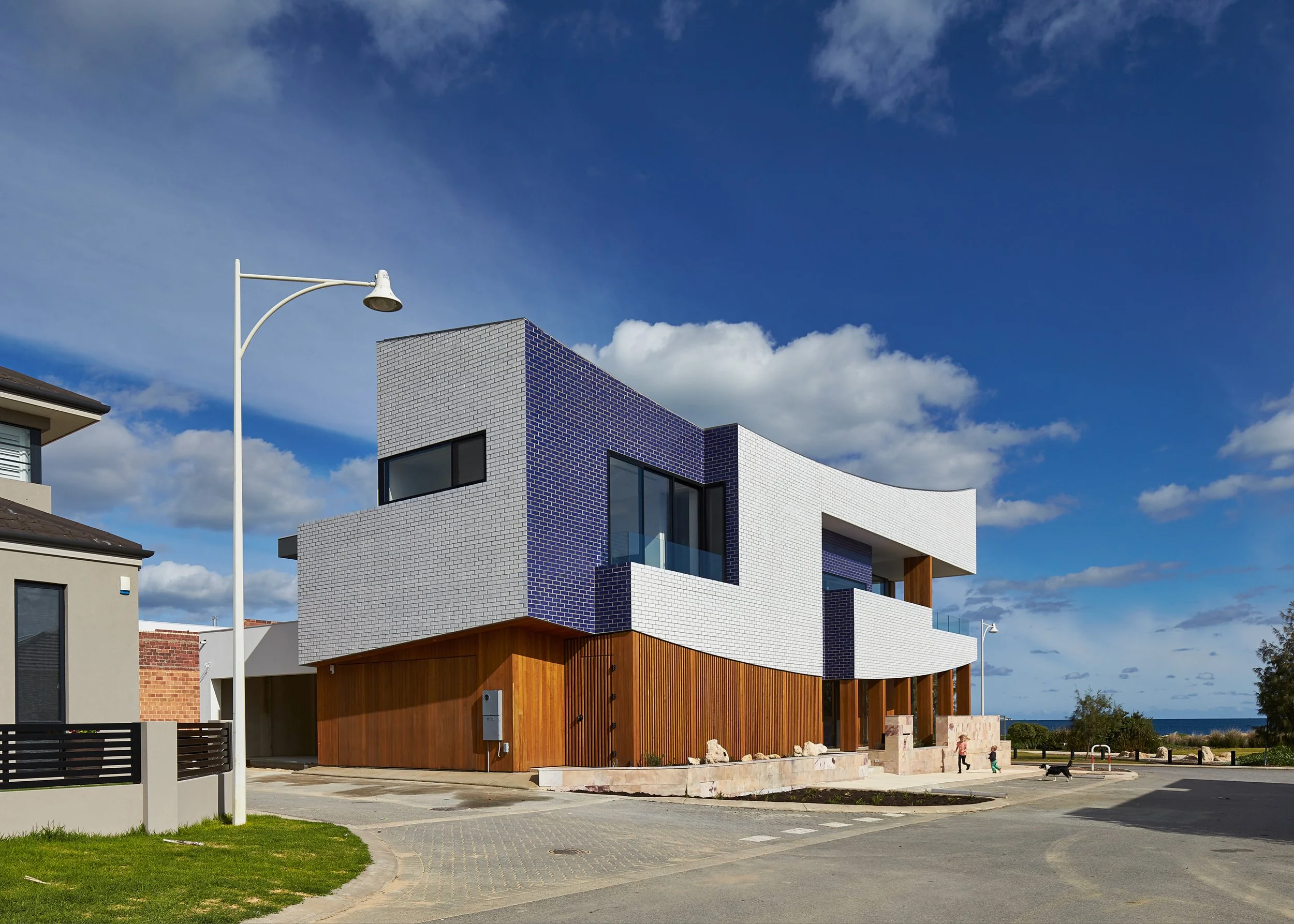
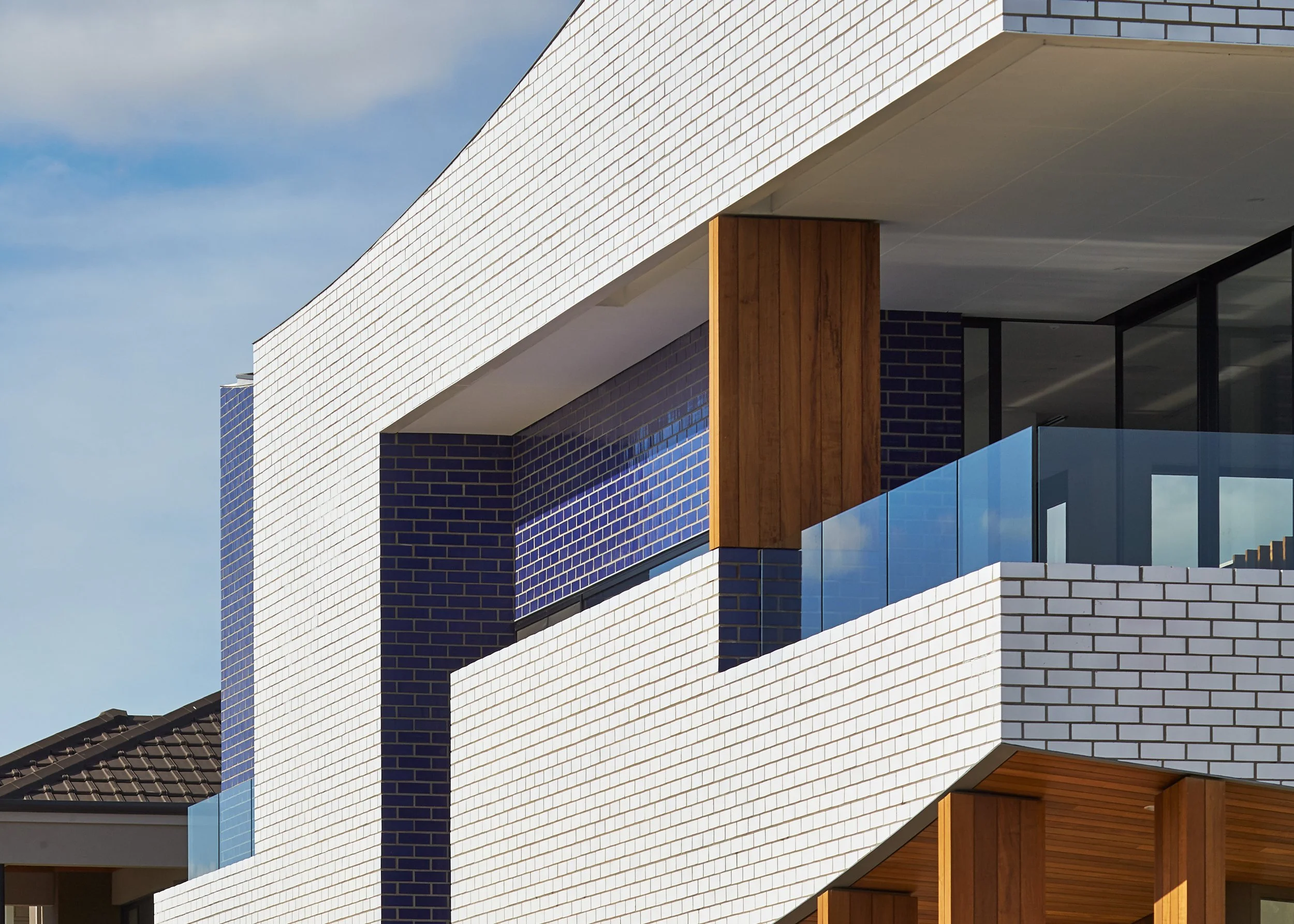
The primary construction challenge was the delivery of a continuous curvilinear masonry form in glazed brickwork, a material that enforces its own geometric discipline on every decision.
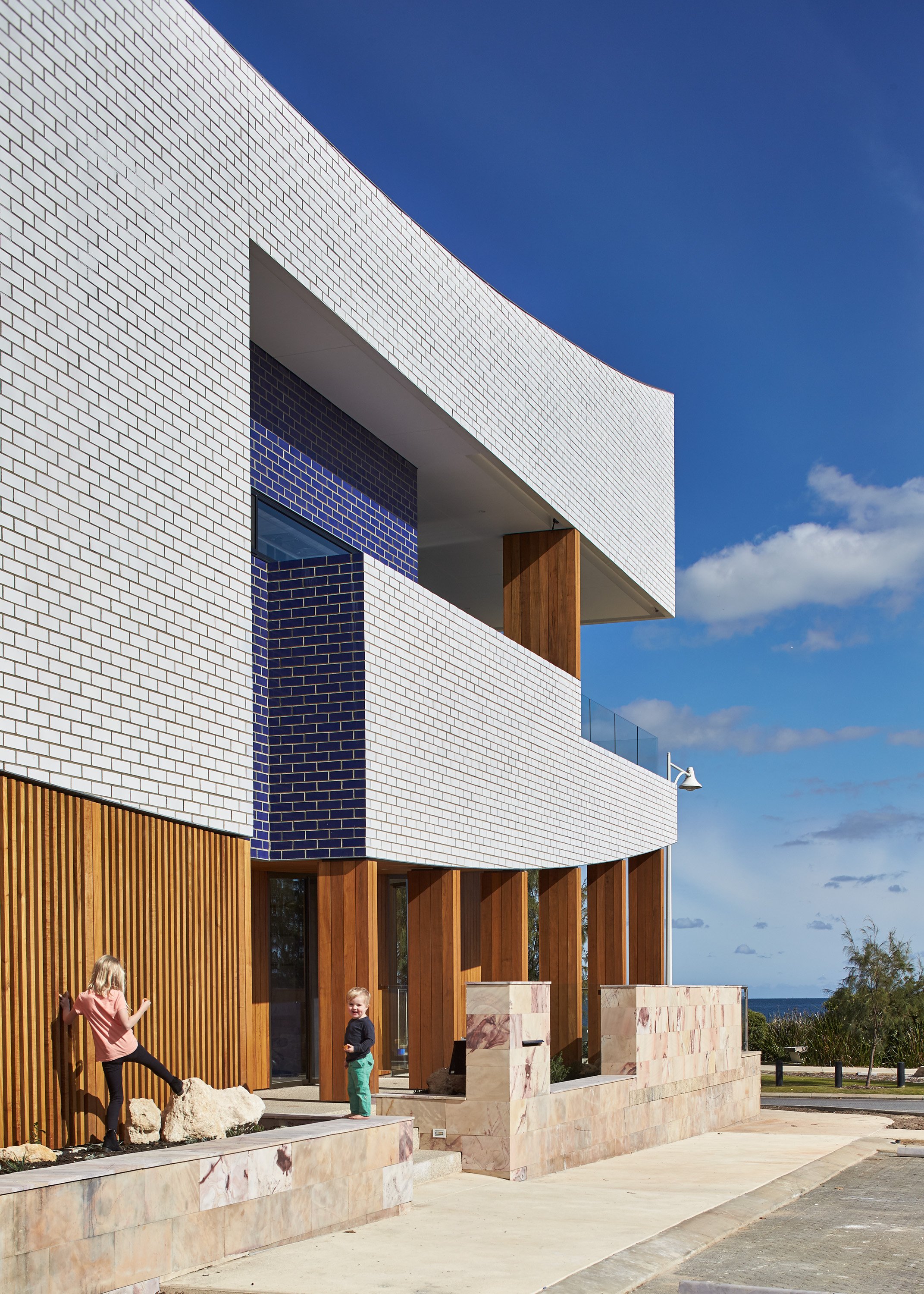
White glazed bricks form the dominant surface, their finish shifting between matte and luminous as coastal light moves across the curved face. Deep blue glazed brick reveals frame each window opening, recessing into the wall with a precision that required structural backup tolerances, window framing, and brickwork set-out coordinated across trades simultaneously. The curved geometry demanded that every course be individually set out to maintain consistent joint widths around the arc, deviation compounding through successive courses to a finish the architecture would not forgive. Bespoke flashings, concealed drainage, and material transitions at the junction between masonry and the lower timber volume were each held to the standard the form required.
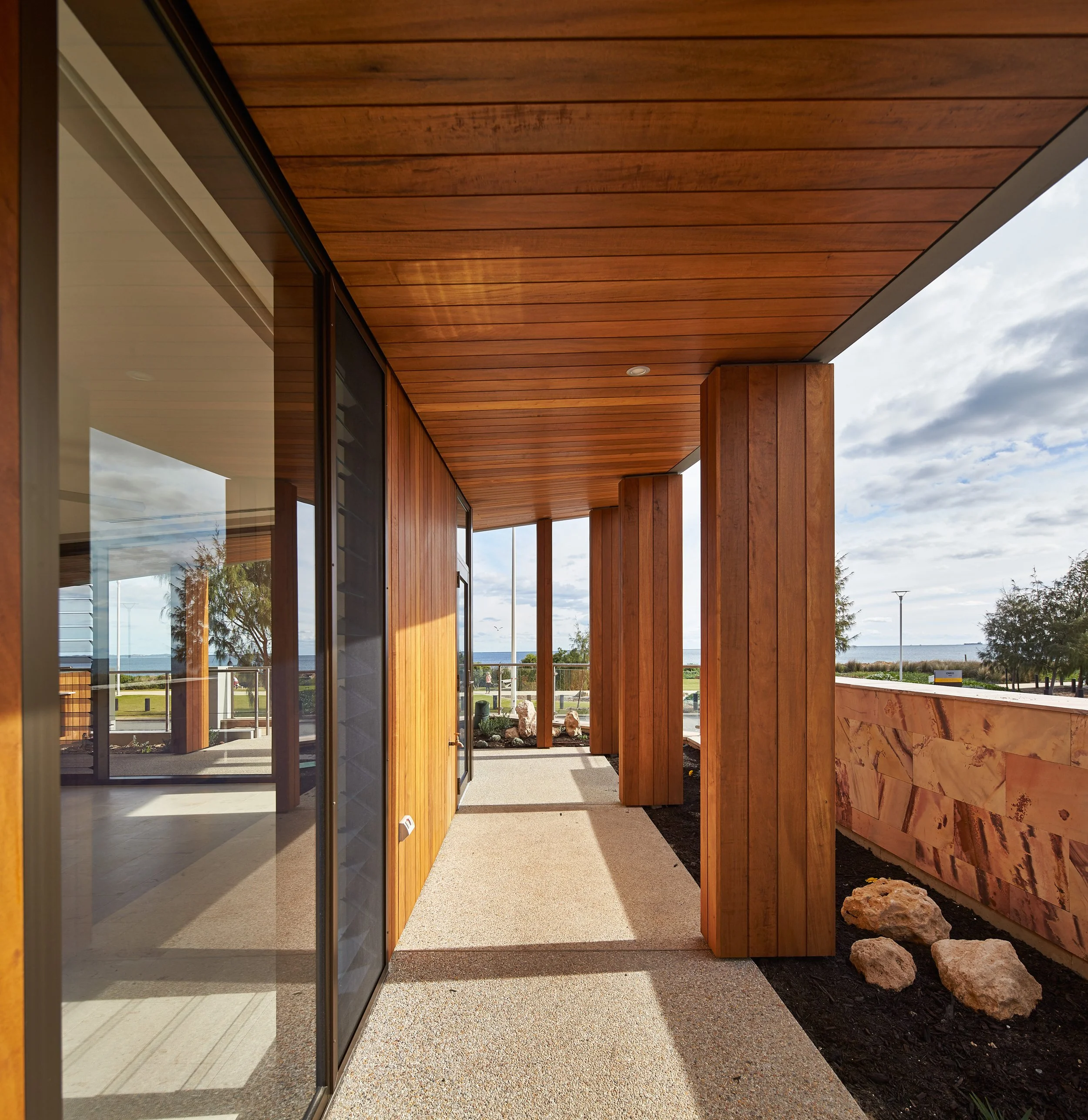
Internally, the residence organises around layered courtyards and landscaped terraces that extend living outward and hold the balance between coastal openness and domestic privacy.
The curvilinear geometry of the exterior continues past the threshold, informing wall planes, ceiling profiles, and the quality of shadow the building casts on itself as the sun moves.
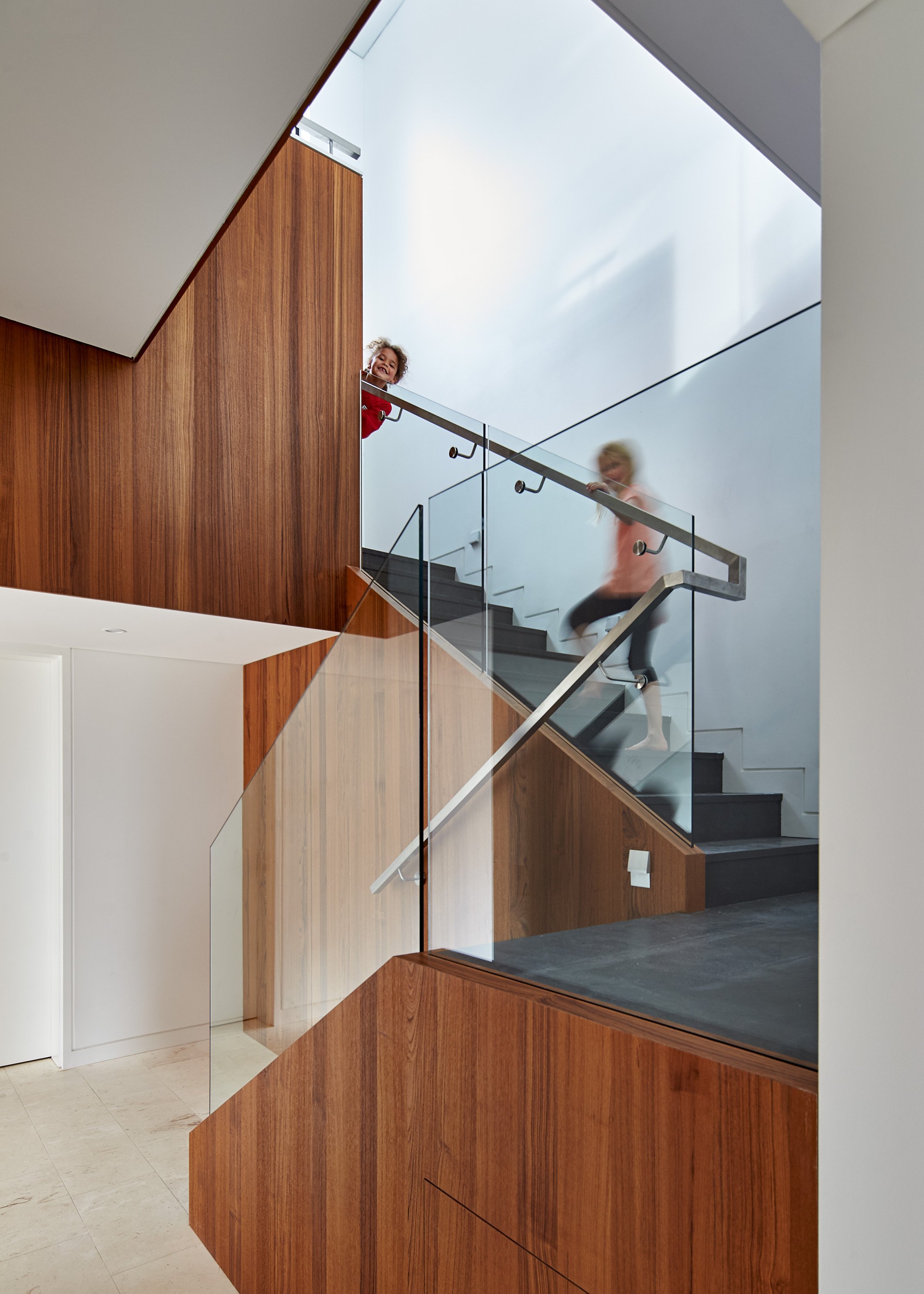
Light enters through apertures set deep into the masonry skin, diffusing across interior surfaces with the warmth that only substantial wall thickness produces.
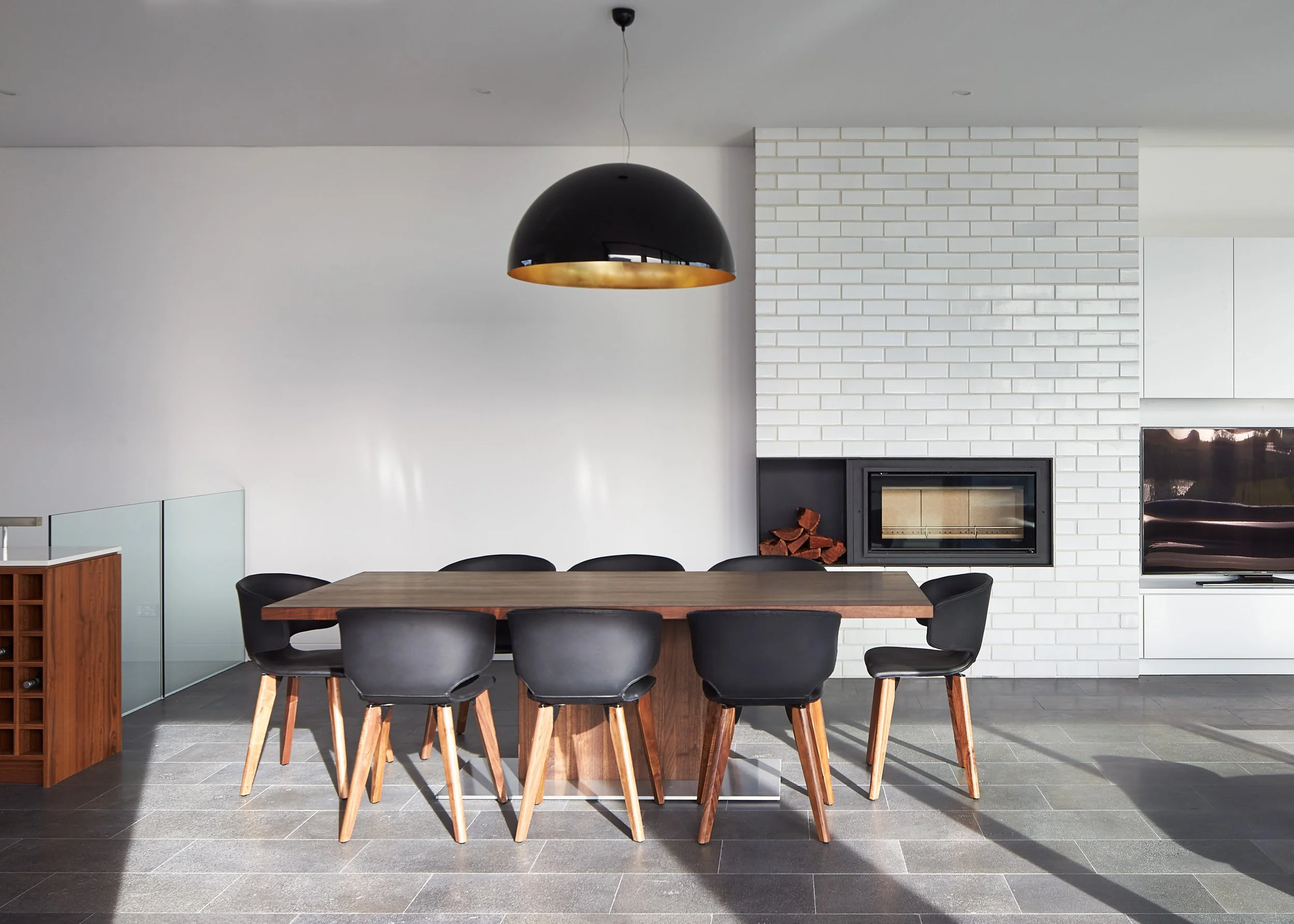
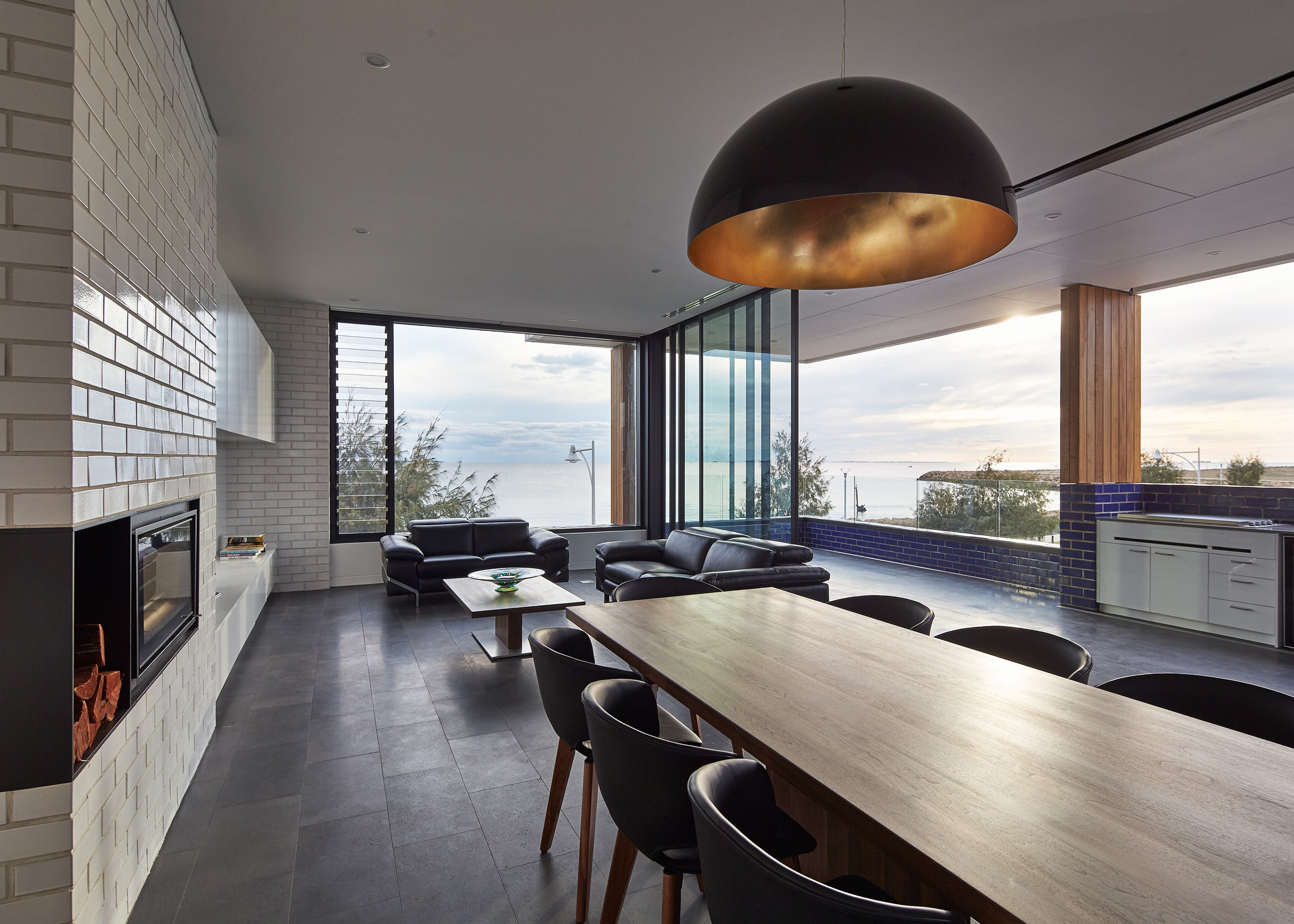
The weight of the exterior, glazed brick, reflective surface, mass of wall, is balanced by the lightness of the coastal outlook framed through each opening.
The building shifts through the day. Its character is not fixed.